
Working for Ambiente for over a decade has allowed me the great privilege of visiting Jerez more times than I can remember. If you've never been to Jerez de la Frontera, you're missing out on one of Andalusia's most wonderful spots.
Jerez isn't just a pit stop between Seville and Cádiz. It's a place where layers of history sit right on top of each other and you can feel them every time you turn a corner.
The story starts around 3,000 years ago when the Phoenicians sailed in and founded a settlement they called Xera. These were traders, sailors and, crucially, people who knew a good vineyard when they saw one! They were drawn to the now-famous Albariza soil: a white and chalky earth that holds onto moisture perfectly in the hot Andalusian climate, perfect for grapevines.
The Romans later took over and renamed it Ceret. They expanded the wine production across the region, because, let’s be honest, the Romans certainly loved their vino! Even then, Ceret was already on the map as being a city of liquid gold.
After Rome, Visigoths and Vandals chaotically passed through. But everything changed dramatically with the arrival of Moorish forces from North Africa in 711 AD. Including the name which became Sherish, a linguistic ancestor of both “Jerez” and “ Sherry”.
Jerez flourished under Moorish rule as a major urban center between Seville and the Atlantic. The Old Town’s winding streets that you still get wonderfully lost in today, defensive walls and impressive irrigation system were all developed during this time.
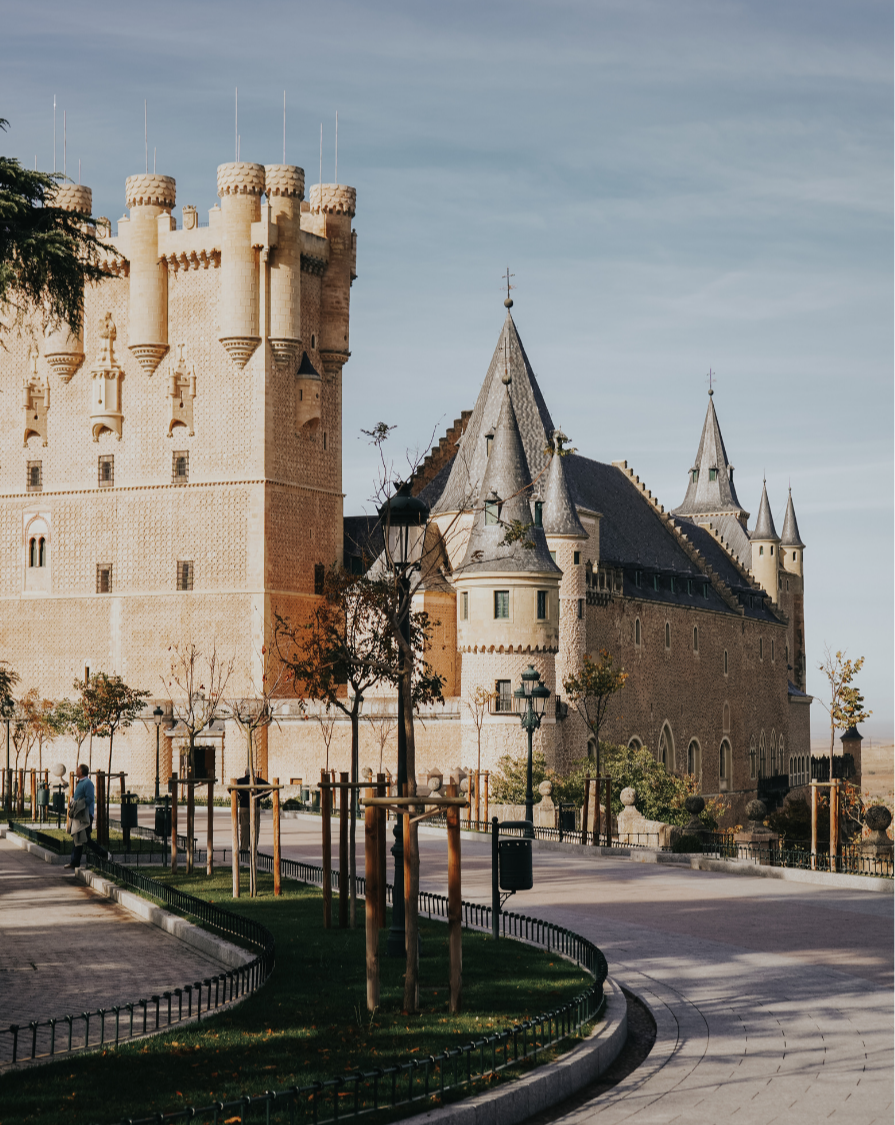
And at the heart of it all is the Alcázar, a fortress and palace built between the 11th and 12th century. Walk the ramparts and you’ll see sweeping views of the city. Inside you'll find remnants of their sophisticated life: beautiful gardens designed for shade and water, an old mosque (later turned into a chapel) and Arab baths with star-shaped skylights. (Just outside, sitting in the shade of trees and escaping the heat of the day, is one of my favourite spots and one you should definitely seek out if you visit.)
Even though wine was restricted under Islamic rules, the vineyards were kept going and grapes were turned into raisins or vinegar, ensuring the tradition never died. Jerez, sitting on the frontier between Muslim and Christian territories, earned its name "de la Frontera” as a reminder of its contested past.
The big shift came in the 13th century during the Reconquista. After the Battle of Jerez in 1231 and a siege, King Alfonso X of Castile finally captured the city for good around 1264. From there, Jerez was gradually Christianised.
Churches were built, often right on top of Mosques. And architecture styles were blended seamlessly into what we now know as Gothic, Baroque and Mudéjar (the fusion of Islamic geometry with the spirituality of Christian architecture). A feature throughout the old town and one that gives Jerez its identity.
By the 15th century, Jerez was thriving again, driven by agriculture, livestock and especially wine exports. But the real boom for sherry came in the 18th and 19th century, thanks to British merchants discovering its fortified wines.
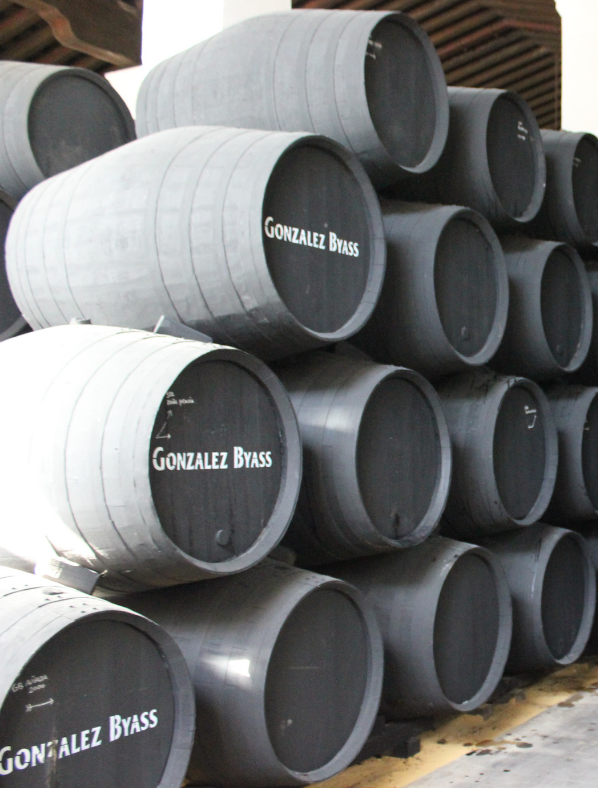
Families like the Domecqs and Gonzálezes built vast bodegas: cathedral-like, cavernous warehouses where sherry is aged in oak barrels using the unique Solera system of fractional blending. And of course, we Brits loved it! Unable to pronounce “Jerez” properly, it became “Sherry” where it found its fame from London to the rest of the world.
Walking through bodegas like Tío Pepe or Lustau today still feels like stepping into living history. The air alone tells the story: nutty, salty aromas of fino to the rich sweetness of Pedro Ximénez provide one of the most atmospheric experiences in Spain and are unmistakably Jerez.
Alongside wine, two other passions define Jerez: horses and flamenco.
The Andalusian horse has been refined over centuries, tracing back to ancient Berber stock. Noble and agile with arched necks and a fiery temperament, they became a symbol of power and elegance. The Royal Andalusian School of Equestrian Art showcases this heritage through their stunning “How the Andalusian Horses Dance” shows, where their performances feel more like ballet than dressage.
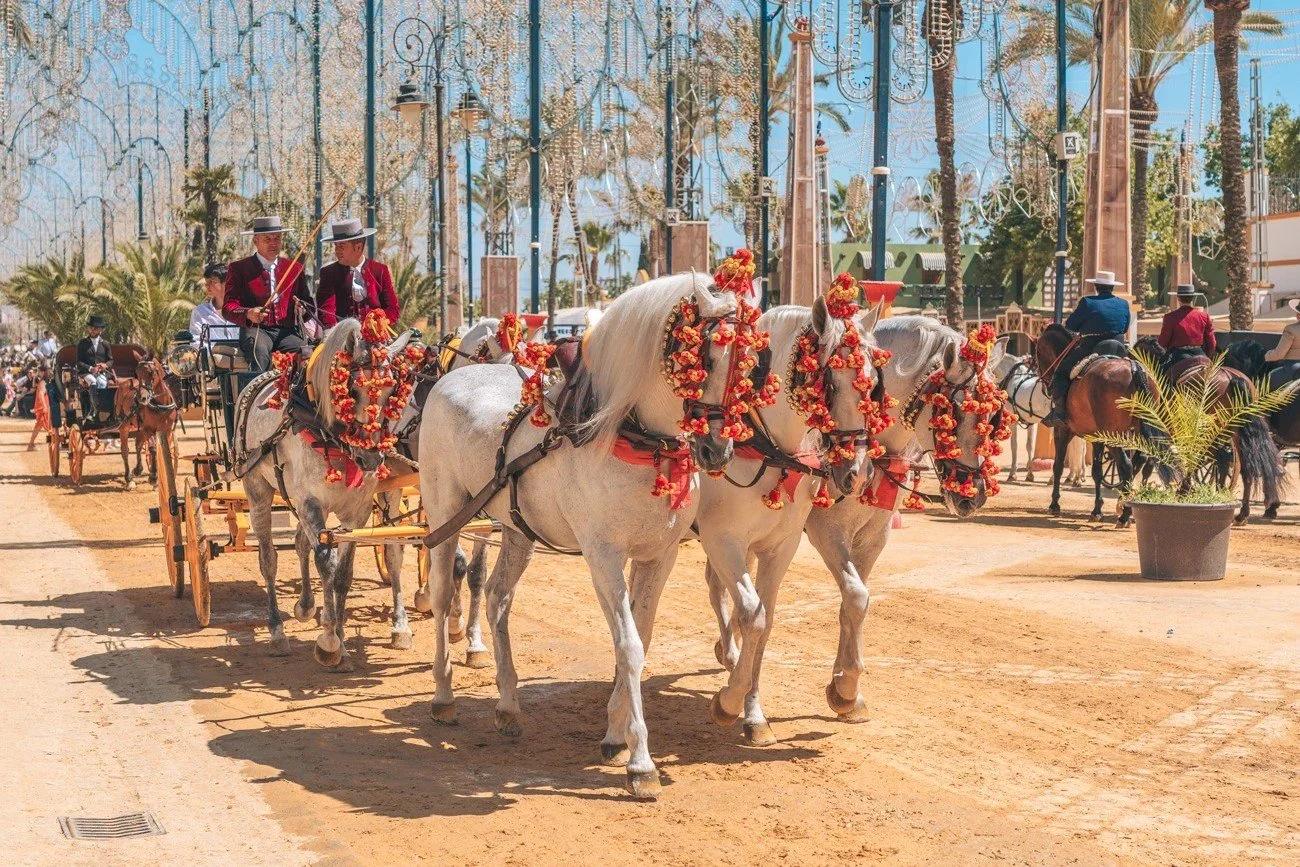
Its heritage remains one of the city’s cultural treasures, highlighted at their annual Feria del Caballo (Horse Fair), every May. It’s a celebration of horses, carriages, sherry and flamenco, reminding the city and the world of their vast heritage.
Flamenco, a passionate mix of song, dance and guitar, is equally central. In the gypsy quarter of Santiago especially, the cante jondo (deep song) style offers raw emotion and is deeply rooted in local life.
In Tabancos (traditional Andalusian bars) like El Pasaje, where I’ve spent many evenings with our team members, sherry is served straight from the barrel while local artists perform. An experience that’s received international coverage and for good reason. The Andalusian Flamenco Centre is working to preserve the art, but to experience it in real life is to happen upon it spontaneously in Peñas (clubs) and backstreet bars.
The 20th century brought ups and downs through war, economic shifts and evolving tastes. But throughout all this, Jerez held onto its identity. The Sherry trade had its booms and crises too, but it adapted. Today, the sherry industry is protected by the Denomination of Origin Jerez-Xérès-Sherry and continues to anchor the city alongside growing tourism.
The city feels vibrant yet unpretentious: beautiful plazas like the Arenal, elegant palaces, working bodegas, a zoo and even a racetrack nearby for the Spanish Grand Prix.
Every year I take team members out to Jerez. It isn't flashy like Seville and feels different to Cádiz. It’s deeper and earthier and I’m reminded that this isn’t simply a city you visit. It's where Phoenician grapevines still produce wine, where Moorish walls frame Christian cathedrals, where horses dance with military precision and gypsy voices pour out centuries of longing. And most importantly, it’s a city you absorb.
If you go, slow down. Sit in a plaza with a glass of fino and enjoy the Andalucian pace of life, letting the city unfold around you. With 3000 of years of history to soak up, this isn’t a city you should hurry. So with that in mind what are you waiting for?
Rob
Fancy tasting 3000 years of history? You can with our June Jerez Specials: Tortillitas de Camarones & Tio Pepe Fino En Rama

Crispy Shrimp Fritters & Tio Pepe Fino En Rama
Tortillitas de Camarones are the perfect pairing with this year’s Tio Pepe Fino En Rama. The cold, saline freshness of the sherry cuts through the fritters beautifully and makes you want another bite… and another sip.
And if you want to find out why these dishes are our Jerez Specials, check out our Recipe & En Rama posts.
Book your table to experience Jerez today!