
Assuming you’ve already read the “Hate” piece where I grumble about Rioja's wine regulations, it seems only fair to point out that the place itself is bloody marvellous.
Because Rioja is one of those destinations that makes you question several of Britain's fundamental life choices. The weather is generally better, lunch lasts longer, wine appears on the table without anyone suggesting you download an app, and people seem perfectly comfortable eating dinner at an hour when most Brits have already turned off the kitchen light and put the cat out.
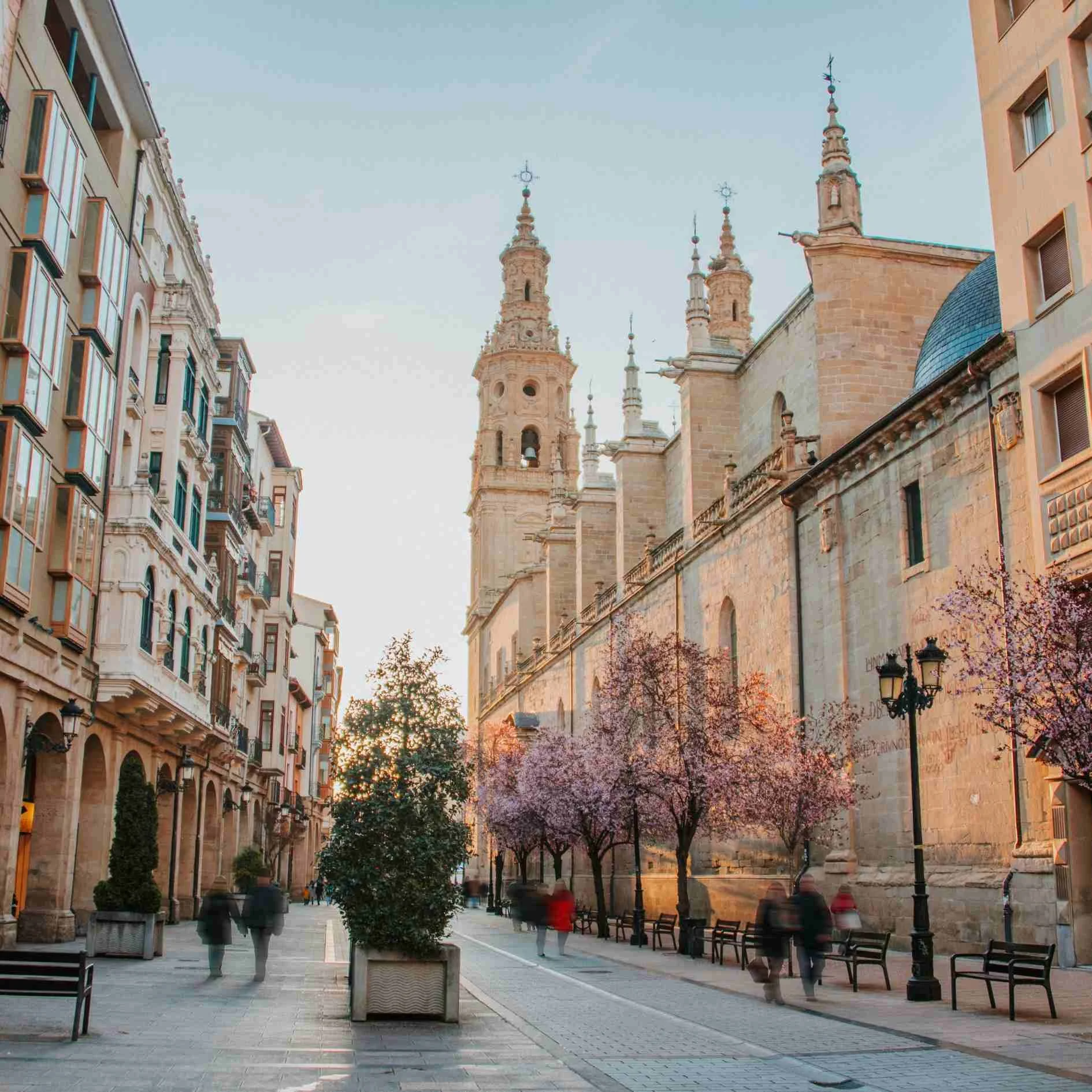
The capital of La Rioja, Logroño
The obvious starting point is Logroño, Rioja's capital and possibly one of Europe's finest places for turning "shall we just have one?" into an eight-bar expedition.
The epicentre is Calle del Laurel, a narrow street and its surrounding lanes packed with tapas bars, each often specialising in one particular thing. This is not tapas in the British sense of ordering twelve dishes simultaneously and discovering you've accidentally spent £194 on small plates. You move around. A mushroom here, some grilled pork there, perhaps a croqueta, a glass of Rioja, then onwards.
It's essentially a pub crawl with better snacks and considerably less chance of encountering a fruit machine.
Nearby Calle San Juan offers more of the same and is slightly less famous, which makes it particularly useful when Calle Laurel begins resembling the concourse at King's Cross.
In spite of my views on traditional Riojas, I would still recommend indulging plentifully in the local wines. However, my advice would be to eschew all traditional looking fare (frosted bottles, labels with heritage fonts, crests or gold lettering) and instead look for labels with attitude and personality. They are generally fresh, interesting and individual and produced by single-minded winemakers. Some still operate on the fringes of what is allowed whilst others are complete rebels. Virtually none will be readily available back home so this is your chance to try them.
Haro is Rioja's historic wine capital and essential for anyone interested in the region's traditional bodegas. Its Barrio de la Estación contains an extraordinary concentration of famous producers clustered around the railway station, a legacy of the nineteenth-century wine trade. López de Heredia, La Rioja Alta, CVNE and Muga are all here.
For wine enthusiasts it's roughly equivalent to discovering that the Beatles, Stones, Led Zeppelin and Pink Floyd all rehearse in an industrial estate behind York station.
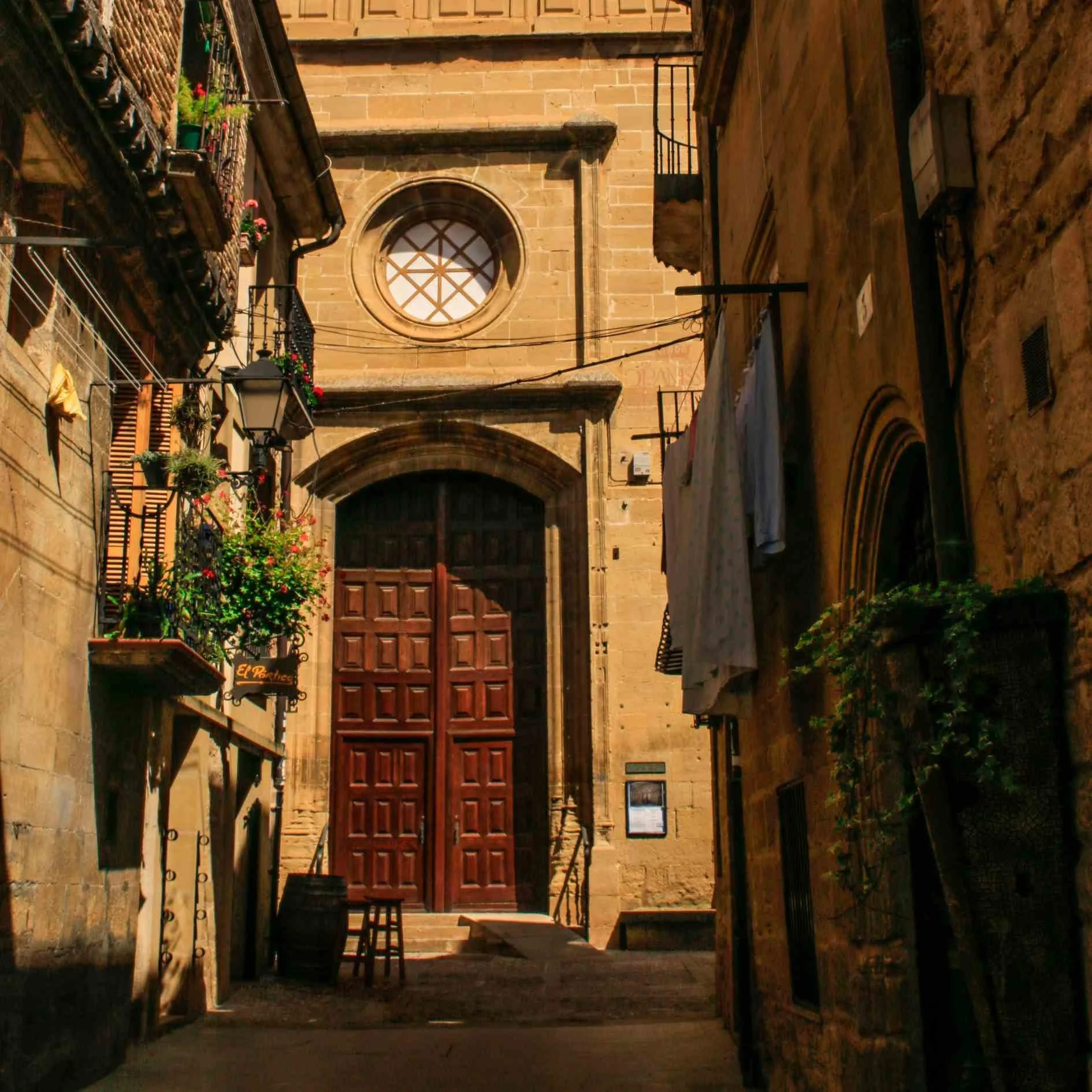
Laguardia, Spain
Laguardia is another must see. Perched dramatically above the vineyards in Rioja Alavesa, this medieval walled town looks exactly like you’d expect a "Spanish wine village" to look. Beneath its streets is a network of ancient wine cellars, while above ground you'll find bars, restaurants and views across vineyards towards the Sierra de Cantabria. It is seriously pretty.
Nearby, architecture becomes considerably less medieval. Marqués de Riscal's winery hotel, designed by Frank Gehry, erupts from the landscape in a mass of titanium ribbons. Its appearance suggests he had just witnessed and been influenced by a serious RTA involving a dozen or so Airstream caravans. Traditional wine, contemporary architecture, figure it out?
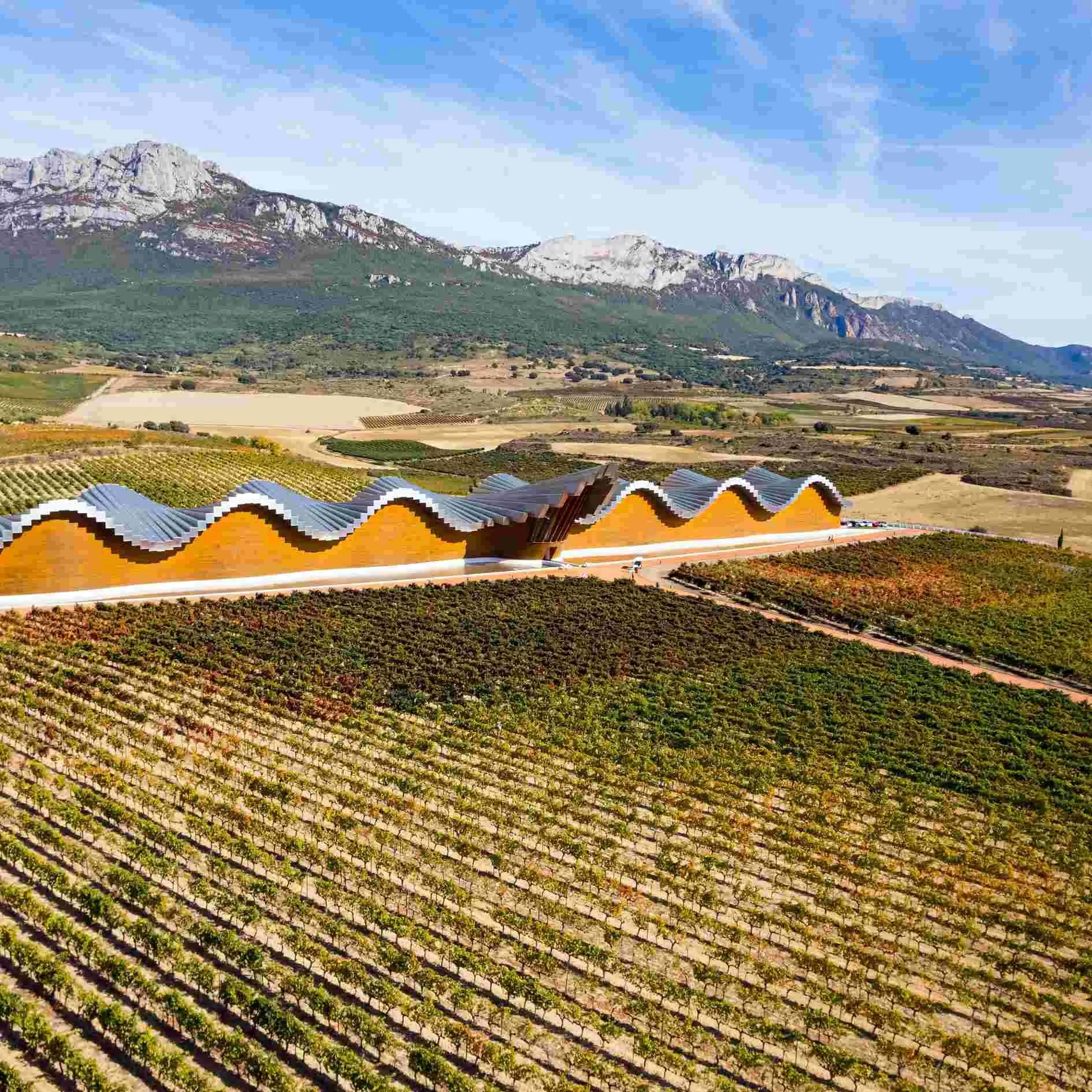
Bodegas Ysios
Then there's Bodegas Ysios, designed by Santiago Calatrava, whose rippling roof echoes the mountains behind it. If you can look at it and not think of the Arctic Monkeys, then you're quite clearly culturally lacking.
Food, however, is where Rioja quietly becomes irresistible.
Look for patatas a la riojana, potatoes cooked with chorizo and peppers: essentially proof that potatoes have been wasting their time accompanying Sunday roasts. Then there are chuletillas al sarmiento, lamb chops grilled over burning vine cuttings, beautifully simple and exactly the sort of dish that makes elaborate restaurant plating seem faintly ridiculous.
Add grilled peppers, local vegetables, mushrooms, charcuterie and enough Tempranillo to render your afternoon itinerary increasingly theoretical.
And that's perhaps the best way to experience Rioja.
Start in Logroño. Eat standing up. Wander Calle Laurel. Visit Haro. Get lost in Laguardia. See the extraordinary wineries. Have lamb chops cooked over the remains of last year's vines.
Because whatever you think about the Consejo Regulador's rulebook, Rioja itself requires remarkably few instructions.
Turn up hungry.
Order the wine.
And cancel whatever you had planned for the afternoon.
Tim
Now you know why I have a love/hate relationship with La Rioja
Ambiente’s Map of Spain
If you’ve been inspired to head to La Rioja or anywhere else in Spain we’ve featured so far, we’ve created an “Ambiente Map of Spain” featuring some of our favourite places to eat, drink and explore. And we'll be adding to it monthly as we discover more of Spain together.
Discover La Rioja in our Restaurants
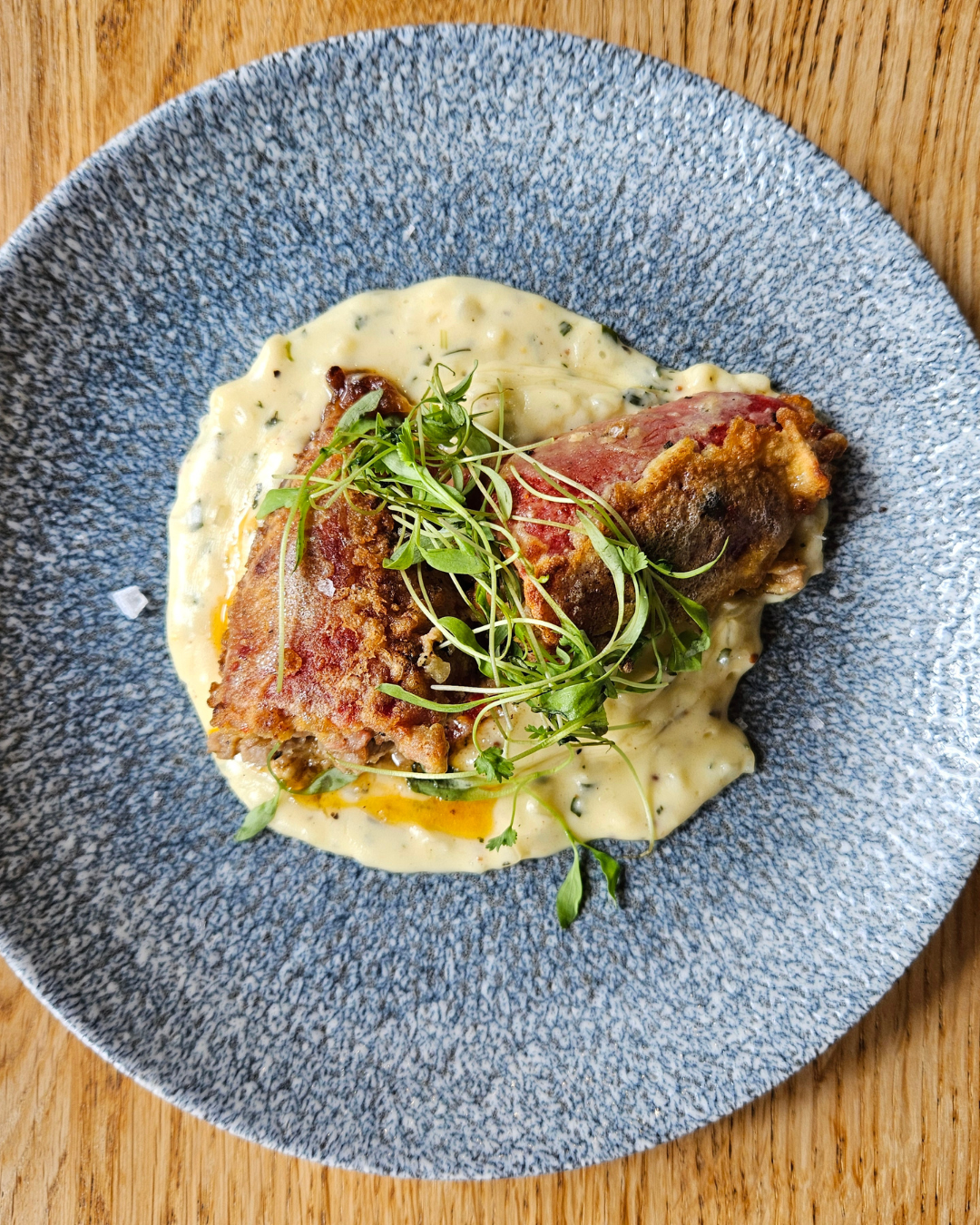
Our September Special!
If a visit to La Rioja isn’t on the cards this month, then we’ll bring La Rioja to you! This month our team have created a deliciously creamy special that will take you straight to the heart of this wonderful city; Pimientos del piquillo rellenos🫑
An ideal pairing with our Riojan Wine specials of the Month!
Book your table to experience La Rioja today!
Come and give them a try while they're on the menu. Available throughout September.

Discover Spain
Keep exploring Spain with us...
From recipes and regional drinks to local history, travel tips and hidden gems, our Discover Spain series celebrates the places that inspire our menus.
Browse all of our Discover Spain features here.