
Extremadura: Spain’s Wild West of Wine
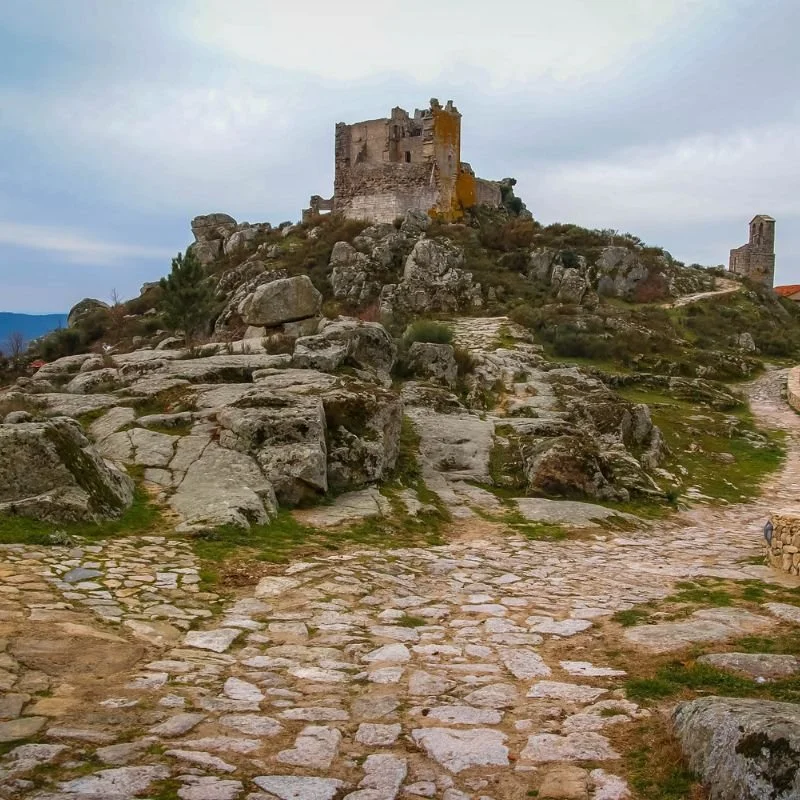
Roman ruins in Extremadura
This month we travel west towards Portugal to discover Extremadura, a sun-drenched region whose wines remain one of Spain's best-kept secrets. Here, vineyards share the landscape with cork oaks, Roman ruins, medieval towns and Pata Negra pigs feasting on acorns beneath the trees.
In Extremadura, evidence of viticulture stretches back to before the Romans, while Roman rule firmly established wine as part of regional life. Merida, now the capital of Extremadura, was once Augusta Emerita, one of the most important cities in Roman Hispania.
For much of the modern era, however, Extremadura was known more for producing generous quantities of everyday wine than prestigious bottles. The creation of DO Ribera del Guadiana at the end of the 1990s marked a turning point. Investment followed in temperature-controlled fermentation, modern wineries and more thoughtful vineyard management, helping producers preserve freshness in a famously hot climate.
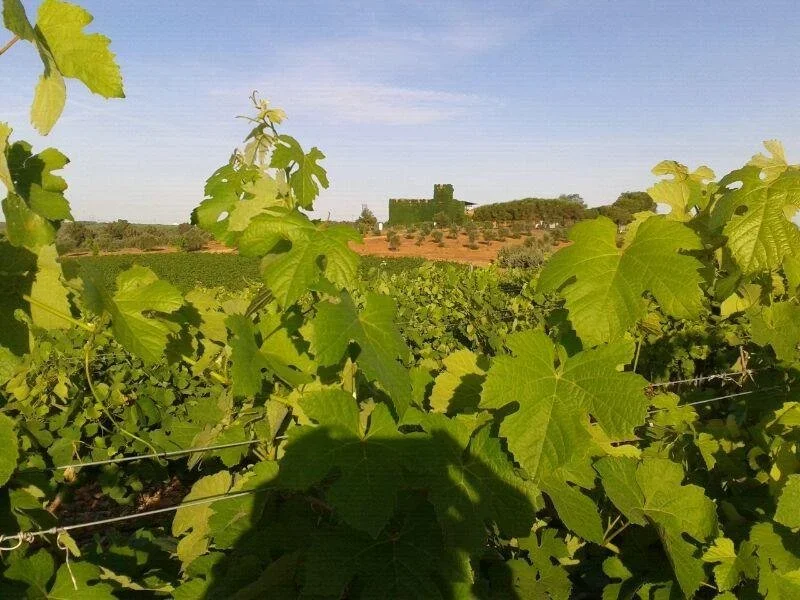
Ribera del Guadiana brings together six contrasting subzones: Tierra de Barros, Matanegra, Ribera Alta, Ribera Baja, Montanchez and Canamero. They extend across both Badajoz and Caceres provinces, with differences in elevation, soils and local climate producing an unusually broad range of styles.
However my focus here is the equally important production of non-DO wines - Vino de la Tierra de Extremadura & more specifically the Coloma family who ignited Ambiente's love affair with the wines of Extremadura.
This isn't a winery estranged from the appellation or excluded by it, it's a respected figure within the Ribera del Guadiana establishment who has separately chosen a different commercial route for their own wines.
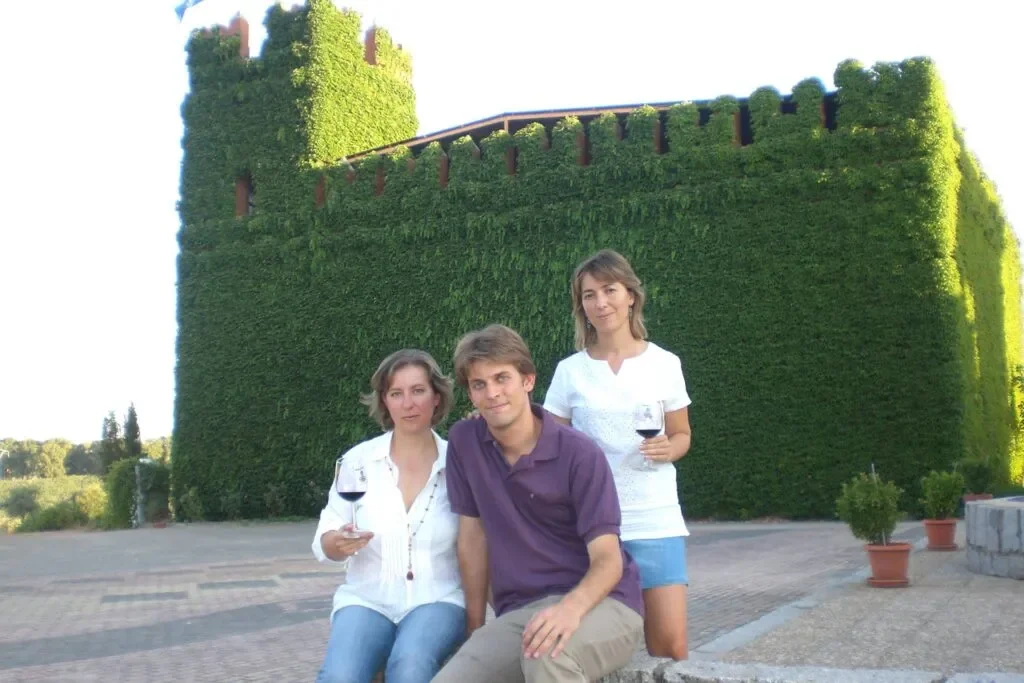
Amelia, Félix & Helena Coloma in front of Bodega Coloma
Coloma wine making spans four generations. Don Francisco Coloma was making wine at the end of the 19th century in Valladolid before his grandson José Félix Coloma moved south looking for a warmer climate. Jose planted the estate's first vines at Alvarado on the Limonetes, a Guadiana tributary, and founded Bodega Coloma in 1966. He brought all three of his children into the business at the end of the 1990s.
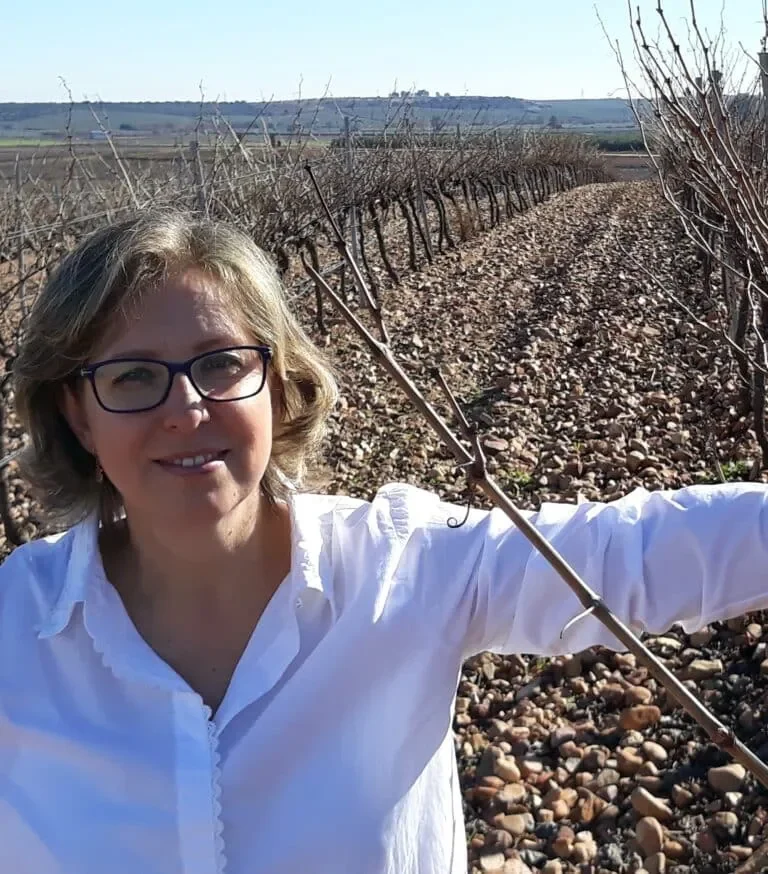
Amelia Coloma
While Helena & Felix focus on the commerce of Bodega Coloma, winemaker Amelia is the creative centre of gravity. It speaks volumes that Amelia as a prestigious winemaker in her own right has been chosen to judge the DO's own awards even though Coloma is working outside the DO commercially.
As with many other smaller, more boutique producers across the region, Spain & the whole of the wine making world there are a number of sound reasons to work outside the regulation of the DO (or similar).
DO Ribera del Guadiana authorise the use of 18 white grape varieties & 16 red varieties. Coloma don’t actually use any others. The genuine constraint on Coloma, then, is not the grape list. It is the yield ceiling and the certification rules. Their whole model, built on ten varieties ripening in sequence at low intervention, sits more comfortably outside these constraints. More eloquently put in their own words, it is ‘the importance of being yourself’.
They have 60 years of continuous vineyard work, predating the creation of the DO in 1999, they actively work to re-establish almost extinct grape varieties, most notably Alarije, & they fly the flag for Extremadura exporting across Europe & as far as Japan.
A Region full of grape personalities
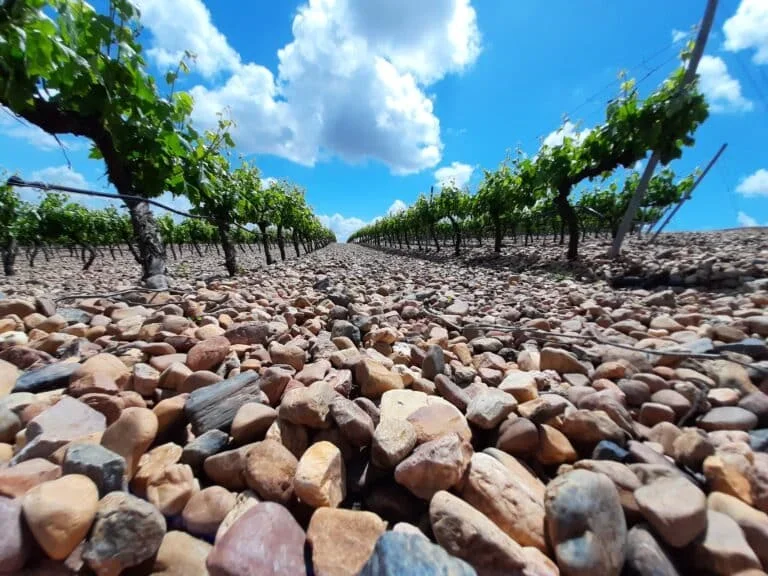
Alarija grapes in Extremadura
Extremadura's most exciting white grape may actually be Alarije. It retains useful acidity in hot conditions and generally contributes citrus, orchard-fruit and herbal notes to dry whites, often as part of a blend. Cayetana Blanca and Pardina remain important regional workhorses, while Macabeo, Chardonnay and Sauvignon Blanc also feature.
Muscat adds an entirely different personality. Both Muscat of Alexandria and the more perfumed small-berried Muscat are permitted within Ribera del Guadiana. Expect exuberant aromas of orange blossom, fresh grapes and Mediterranean herbs. Producers can use it for fragrant dry wines as well as sweeter styles, making it a natural partner for spicy dishes, fruit or pastries.
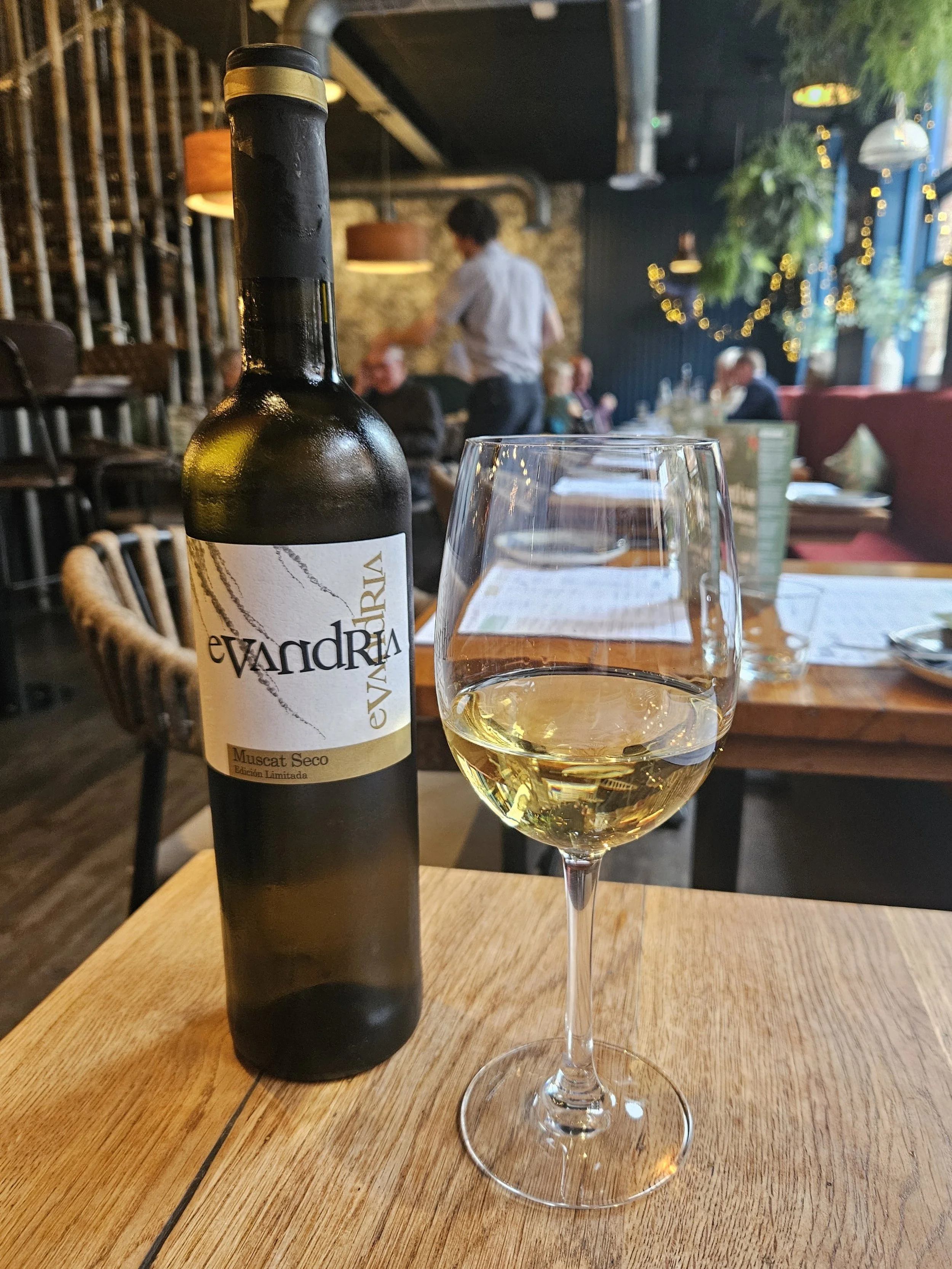
Muscat Seco
Tempranillo (Cencibel) leads the reds. It produces everything from bright, juicy young wines to oak-aged bottlings with plum, cherry, tobacco and spice. Garnacha, Graciano, Syrah and Cabernet Sauvignon add further options.
Then there is Garnacha Tintorera, known internationally as Alicante Bouschet. Unlike nearly every familiar red grape, its flesh as well as its skin is pigmented. Consequently, it produces deeply coloured wines with dark fruit, firm structure and plenty of blending power. It is increasingly valued as more than merely a source of colour.
More surprising is the use of Pinot Noir in the region. Officially permitted but far less widely planted, this famously delicate Burgundian grape presents a challenge under the Extremaduran sun. Carefully sited vineyards and earlier harvesting can nevertheless yield lighter, aromatic reds with red-cherry and floral notes - a refreshing contrast to the region's more powerful wines.
The neighbouring influence of Portugal can also be tasted in Touriga Nacional. Its violet perfume, concentrated black fruit and formidable tannins make it a compelling partner for Syrah and Garnacha Tintorera.
From vineyard to table
The basic rule of wine pairing is ‘what grows together goes together’ & in Extremadura you can not go wrong with this. Begin with the world renowned Jamón Ibérico de Bellota, whose sweet, nutty fat is refreshed by a crisp Alarije white or a lively rose.
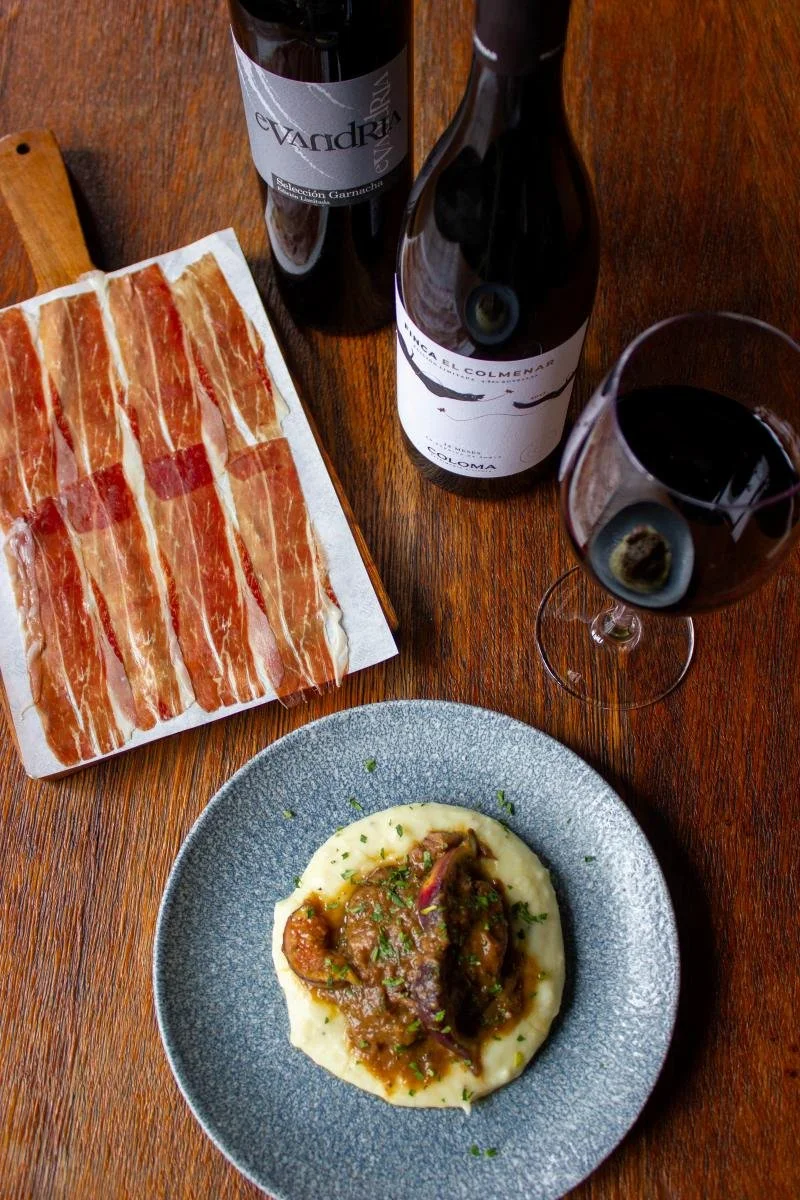
Jamón Ibérico de Bellota & Carillero de Cerdo
Equally fresh white such as Alarije pair beautifully with river fish, grilled vegetables or migas, the local rustic dish of fried breadcrumbs enriched with garlic, paprika and pieces of pork. In contrast an aromatic dry or off dry Muscat can work beautifully with dishes flavoured with the the smoky heat of local pimenton de la Vera.
Young Tempranillo belongs with chorizo, grilled pork or tomato-rich dishes. More mature reds suit roast lamb, venison and Caldereta de Cordero, the region's robust lamb stew. Garnacha Tintorera or a Touriga Nacional blend has enough depth for game, while lighter Pinot Noir pairs well with partridge or mushroom dishes.
Finally, for the most indulgent of treats, open a Torta del Casar, the region's famously soft and intensely savoury sheep's cheese. Scoop its creamy centre onto bread and enjoy with a well structured local red.
Zoe
Ready to try Extremadura?
Come and try it! This October, we’re bringing the mountainous Extremadura region to you.
Ethan enjoying our Rioja flight
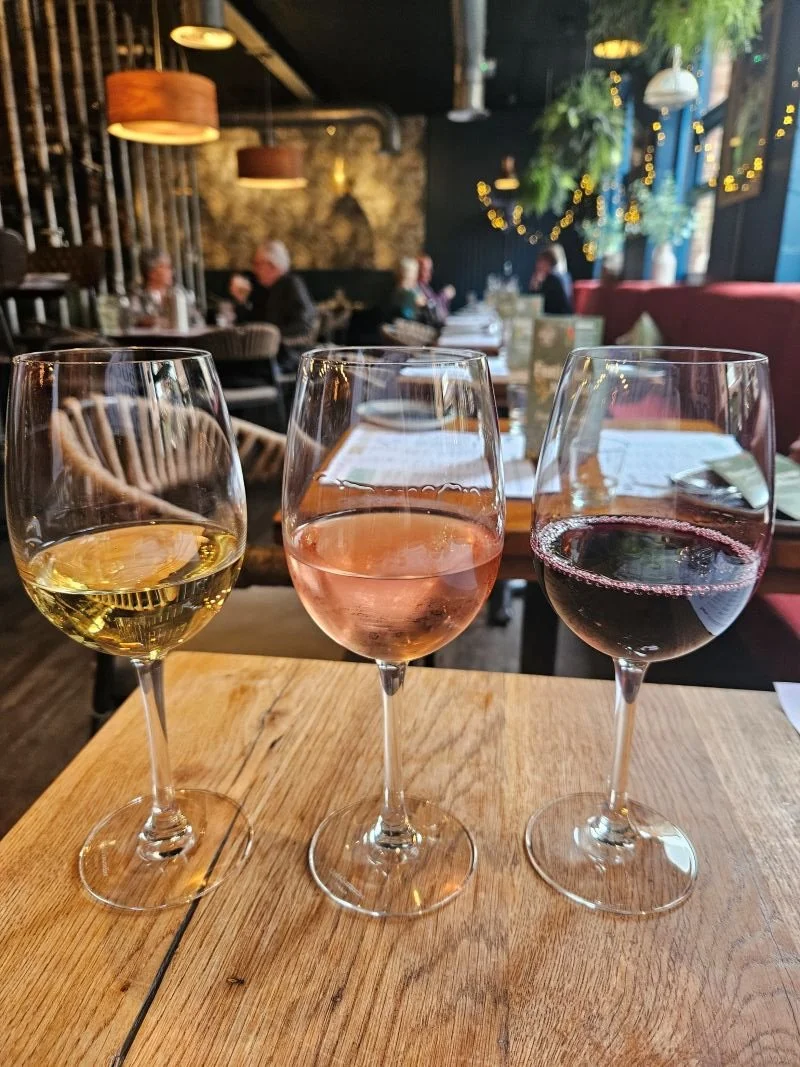
Throughout the month, our restaurants will be serving our Extremadura Drinks Menu, featuring a selection of wines that you wouldn't normally find available by the glass – plus two Extremadura wine flights so you can taste your way through the region as well as some curated Extremadura-inspired cocktails.
Pair our drinks with our October Extremadura-inspired food special:
Jamón Ibérico de Bellota
Premium Jamón Ibérico de Bellota from the Pata Negra Pig.
Carillera de Cerdo
Oloroso braised pork cheek with confit garlic mash and figs
So, which Extremaduran Wine will you choose?
Our special Extremadura menu is available throughout October so book your table today!
We’d love to see your Extremadura Journey!
Share a photo of your Extremadura experience at Ambiente & we’ll enter you into our monthly competition to win a £30 Ambiente Voucher.
To enter:
We’ll pick one winner each month! T&Cs apply.